Sunday, March 27, 2011

Maxwell's Equations

If you were on the MIT campus for any length of time, sooner or later you would encounter Maxwell's Equations. Usually the moment occurred in Spring semester of the freshman year, in 8.02 class, which was Electricity and Magnetism and was a requirement (Well, it or one of the other related classes - 8.021, 8.022 or 8.023; we always called them Physics for Poets, Eight-oh-Two-Screw or Physics for Pre-Meds). Those who entered Course 6 would live with them for the rest of their undergraduate years. There were four of them, and they all had significance in the field of electromagnetic theory. They were named for James Clerk Maxwell, and they described electromagnetic fields. The first was Gauss's Law, the second was Gauss's Law for Magnetism, the third was Faraday's Law  and the final one was Ampere's Law.

In their ordinary physics form, the integral form, Maxwell's Equations looked like this:
[Maxwell's equations]
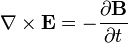
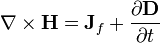
In the form that most electrical engineers found them, which was the differential form, they looked like this:
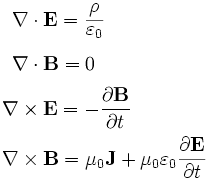
Or they could be found like this:
\nabla \cdot \mathbf{D} = \rho_f
\nabla \cdot \mathbf{B} = 0
\nabla \times \mathbf{E} = -\frac{\partial \mathbf{B}} {\partial t}
\nabla \times \mathbf{H} = \mathbf{J}_f + \frac{\partial \mathbf{D}} {\partial t}
But there were other forms of the equations, as demonstrated by Ross:
 
There was one final form:
By the way, the funny round black object is called a long-playing record. It was used to play recorded music on something known as a record-player (hip-hop and techno DJ's call them turntables or wheels of steel and use them to make scratching sounds in noisy nightclubs where alcohol, hookahs and funny green tablets are passed around and consumed). Records were popular back in the days before compact discs and MP3 files existed and they played strange music called rock-and-roll that certain religious officials objected to. There were even claims you could play records backwards and hear voices from Satan, but everybody knew it was just Ozzy Osbourne. No one has yet tried to play an MP3 file backwards.

A popular shirt, sold by the Hillel Society, had the following message printed on it:

And God Said:
\nabla \cdot \mathbf{D} = \rho_f
\nabla \cdot \mathbf{B} = 0
\nabla \times \mathbf{E} = -\frac{\partial \mathbf{B}} {\partial t}
 \nabla \times \mathbf{H} = \mathbf{J}_f + \frac{\partial \mathbf{D}} {\partial t}
and there was light
and there was much rejoicing.

Saturday, March 26, 2011

Pud Meets His Maker

The common assumption of most Stickles readers is that Pud was related to me in some sort of way. And there may have been a small grain of truth to that. However, I did appear in one cartoon, dispensing beer at a Strat's Rat, the Student Center Committee's once-a-fortnight mixer. It was the only time Geoff Baskir was seen in cartoon form in Stickles or anywhere else. And probably the only time Chris Tracey (Class of '76, crew jock and also an SCC honcho) was seen in a cartoon, also. She's the lady next to me in the first frame.
One thing you'll notice is the goatee. I had hair on my face, dating from the time I slipped and fractured my ankle on the East Campus ice and decided I didn't have time to learn how to shave my face while standing on one leg. I also parted my hair down the middle - the better to impress record distributors (I wrote record and concert reviews for thursday, and all the major labels had representatives in the greater Boston area). Both of those affectations ended as soon as I entered the job market. Till then, my nickname on the intramural flag football gridiron was "The Weasel". Today, I am clean-shaven, and some in my family claim my hairline is receding.

The beer of choice at Strat's Rat was not Miller, but Tuborg Gold. Tuborg was imported - all the way from the Carling Brewery in Baltimore. There could have been worse beers on tap, but there couldn't have been anything cheaper. When the drinking age in Massachusetts was raised to 21 in 1979, Tuborg was off the menu, and Strat's Rats were no more. I'm not sure if many people were crying in their beers over that.

Spring Training

Baseball season is almost upon us - which means that all good Red Sox fans will soon go into their annual vigil that will be disturbed not once by such trivia as eating, sleeping or proper hygiene. It also means that it's Spring, when the trees bud, the birds sing and the clocks spring forward. Daylight Savings time used to begin in mid-April, but global warming has caused it to gradually appear much earlier in the year - like the second weekend in March.

Spring weather in Boston is famously unpredictable. It can be hot and unbearable one day, say, 90 degrees in the shade, and then the breeze comes in off the Bay and the next day is only 55. There can be fog, rain, snow, sleet, thunder, lighting, hail and even volcanic eruptions - all in the same week (actually, the nearest volcano is in Iceland, and the prevailing winds carry the ash plume over Europe instead of New England). But there is one blessing - the layer of snow that covers the MIT campus from December to March finally melts away, revealing such wonders as sculptures that the students buried under snow in January. One of my dorm-mates also took note of the freeze-dried dogshit that appeared in the grass when the snows had melted.

Snowmelt meant it was possible to play softball. We could get in a good practice on the oval in front of the Green Building, where a few of our mighty sluggers would try to bounce a fly ball off the Sail. But because the weather was tricky, we never knew when practice could be held...

Friday, March 25, 2011

Characters: Meldrim Thomson, Jr.

Today's New Hampshire is a suburb of Boston known for its breathtaking mountains and winter skiing, but in our day, New Hampshire was a wild frontier just north of the Massachusetts border. It was perhaps best known for its liquor stores, which were tax-free and therefore cheaper than those in Massachusetts - a fact that lured many an MIT undergraduate to visit the bucolic town of Nashua, back in the days when the drinking age was only 18. Revenue from liquor sales (and a crappy schools system) meant that New Hampshire did not have an income tax, and every governor was required to Sign The Pledge that he would not introduce an income tax if elected. Property taxes were another thing altogether, and residents of New Hampshire paid dearly for their property. Nonetheless, New Hampshire would forever sing the siren song of "no income tax" to residents of the metropolitan Boston area, hoping to lure them over the border.

Fiercely independent and hide-bound conservative, New Hampshire was fertile territory for loopy extremists, although it broke Ronald Reagan's heart in 1976 by dallying with him before ultimately casting its vote for President Gerald Ford in the primary (the Democrat it picked was Jimmy Carter, and we know the rest of that story). New Hampshire also played footsie with Pat Buchanan in a couple of elections, and it even cast couple of votes for a candidate named Vermin Supreme (he finished ahead of Tom Tancredo in the 2008 GOP primary). New Hampshire has a town called Dixville Notch, and every Election Day, its citizens - all 40 of them - march down to the polls at midnight to cast their vote.

New Hampshire had also voted Republican in just about every election - until John Kerry and Barack Obama came along. Lately, the state has been trending Democratic, having elected two of them governor in the past ten years and having cast one of them, Jean Shaheen, into the Senate after she defeated a favorite son of MIT named John Sununu. Current governor John Lynch seems destined to be around as long as Queen Elizabeth,  but in the time I was at MIT, the governor was a fruitcake named Meldrim Thomson, Jr., and he kept the governor's chair warm for six years. Thomson was militantly conservative and militantly anti-Massachusetts (Taxachusetts, he called it). His patron was William Loeb, the slightly less wacky and slightly more dopey publisher of New Hampshire's biggest and most conservative newspaper, the Manchester Union Leader. Loeb's anointment routinely nominated the Republicans who would run in the Fall elections, and most times they won.

Meldrim Thomson was proud of New Hampshire's motto, "Live Free or Die". It was on their license plates. If you covered it up, they'd throw you in jail. Thomson also expressed the desire that the State of New Hampshire should acquire nuclear weapons. But he was perhaps best known for trying to quell a demostration against the building of a nuclear powerplant in Seabrook, New Hampshire, by throwing everyone involved in jail. I thought it only prudent to warn the incoming Class of 1981 all about Meldrim Thomson. Only I spelled his name wrong.
In 1978, New Hampshire held an election and unceremoniously threw Meldrim Thomson out on his ear, in favor of a Democrat named Hugh Gallen. A few years later, they would elect John Sununu (the father of the Senator) as governor, and he would serve there before ultimately being called to serve George Herbert Walker Bush as Chief of Staff. In 2001, Meldrim Thomson was inducted into Heaven, a place teeming with liberals.

Thursday, March 24, 2011

Controversies - the Lecture Series Committee

Some of you may remember the Lecture Series Committee. They were a student activity group that showed movies on the campus every weekend. These were usually feature films that had recently finished their runs at the box office, at a time when VHS and Beta had not yet finished duking it out for supremacy as THE format for home video. LSC was the principal source of cinema on the MIT campus, charging a nominal fee to students for the privilege of sitting in Kresge Auditorium (or Room 10-250, when circumstances warranted) to see "Dirty Harry" or "Star Wars". As a result, LSC was among the elite of the service organizations, along with the Technology Community Association (TCA), service fraternity Alpha Phi Omega and the Student Center Committee (SCC), which ran the Stratton Student Center (naturally). The SCC, which I was privileged to become a member of in my senior year, also ran the Coffehouse in the Student Center and sponsored a number of free events, such as Strat's Rat (all the beer and chips you could consume and all the disco you could stand), occasional live acoustic music performances, and their own Midnight Movies, which were free (just bring a blanket).

Running the campus movies was a major enterprise for the LSC, but that was all in support of their primary mission, which was (wait - it will come back to me soon enough) bringing guest lecturers to MIT. In that vein, they had brought us Henry Kissinger, David Frye (a comedian who sounded like Henry Kissinger on occasion) and Peter Schickele of PDQ Bach fame (he played music like Henry Kissinger). These were serious thinkers and policymakers, and without the money raised by those feature films, LSC could not have brought them to the campus.

At least that was their argument for retaining a monopoly on the showing of feature films at MIT. And they had a nice, lucrative racket going - one that the Social Action Coordinating Committee (remember them?) wanted in on. In 1976, they challenged LSC's monopoly before the Assembly of the Undergraduate Association. This seemed like a slam-dunk; one of their own, Phil Moore, had just been elected Undergraduate Association President, and he had reconstituted a defunct representative parliament of undergraduates elected from all the dorms, fraternities and living groups on campus, to legislate on such matters. Even Bexley had a representative in the Assembly. It couldn't lose. But somehow it did. The proposal to let SACC show feature films in competition with the LSC was voted down by the only deliberative democratic body comprised solely of MIT undergraduates. SACC skulked off and returned to its primary mission in life - harrassing the editors of thursday into running another serialized feature on the Battering Ram.

Of course, it made perfect sense for LSC to have a monopoly. After all, there were only a limited number of films that could be had from New Line catalogue, and two organizations showing films on the same night would have split the campus apart. I think the argument was summed up like this:
Back in 70's, the phone company was AT&T and AT&T was the phone company. It was a monopoly. It controlled all the local service, it controlled long distance and it provided all the phones. In 1983, a lawsuit ended this monopoly and broke AT&T up into multiple pieces, in an effort to foster competition (actually, AT&T agreed to the split-up; they gave away the local services and retained the more lucrative long distance). This effort worked so well that today there is a monopoly phone company. Its name is AT&T.

Wednesday, March 23, 2011

Rite of Spring

Winter in Cambridge, Massachusetts, could be especially cruel to plants as well as students. One afternoon in 1977, several crates of turf arrived on the MIT campus, destined for the Kresge Oval, which was a greenspace in between the MIT chapel and Kresge Auditorium, a domed performance space designed by Eero Saarinen.

Spring at MIT was always unpredictable. In March 1976, after a horrendous winter in which the temperature dipped to 4 below zero, we awoke one Saturday afternoon to a temperature of 94 above zero. In May of 1975, there was a late season snowstorm that brought down trees in Burlington, Mass. And there were occasionally thunderstorms in April. But if you stuck around until June, you would occasionally be rewarded with a nice sunny day that was just right for picnicking - or for melting vinyl records in the exposed sunlight, as one unlucky member of the Student Center Committee found out.

John Silber


One of the more curious cause celebres for MIT's small but vocal coterie of Ayn Rand worshipers was John Silber, who became president of Boston University in the '70s and later ran for governor of Massachusetts in 1990 - and lost. His defeat brought in Massachusetts' first Republican governor since the Cabots had stopped talking to the Lodges, or at least since the days of Richard Nixon. The reason Silber was such a favorite of the pointy-headed purveyors of ego(t)ism was that he was seen as the Rugged Individual determined to bring Academic Excellence to his campus, even if it meant running roughshod over his faculty, which had exhibited the audacity to actually form a union and demand its collective bargaining rights. Excellence, in Silber's case, meant pocketing a nice little retirement package worth about $6 million, which he did in 2006, after having paid himself $800,000 a year, a salary that would normally only be permitted to the football coach at the University of Texas (in the humble opinion of those who preach Libertarian thought and Selfishness as a Virtue, nothing connotes Academic Excellence like having a university president who gets paid huge gobs of money while pleading poverty for his school).
The reason I mention the University of Texas is that John Silber was a professor of philosophy (no wonder the Objectivists all loved him!) and the Dean of the Arts Department there, before he ended up at BU. This was in his more liberal years, when he actually promoted ideas like racial equality and ending capital punishment. Ideas like that could get you skinned in Texas in 1970, but that's not what ended his tenure in Austin. Silber, the rugged individualist, happened to run afoul of an even more rugged individualist by the name of Frank Erwin, who ran the Board of Regents and was the nearest thing to God that anyone could think of (these days his name adorns a basketball arena - one that the local wags used to call the Super Drum because of its round shape, until Erwin threatened to sue). Silber was outta there like spit through a tuba, landing on the BU campus.

Because his exploits made him a hero to the Ergomaniacs, I felt compelled to knock John Silber down a peg. The voters of Massachusetts would not get that privilege until 14 years later.